

Buying land in Kenya can be one of the smartest financial decisions a person makes. Land is a valuable asset, it often appreciates over time, and it can be developed for residential, commercial, or investment purposes. But land buying can also be risky. Many buyers lose money because they rush the process, trust the wrong person, or fail to verify important details before paying.
If you are planning to buy a plot, it is important to know exactly what to check before buying land in Kenya. Proper due diligence can help you avoid fraud, legal disputes, hidden costs, and expensive mistakes. Whether you are buying in Nairobi, a satellite town, or a rural area, the same basic checks apply.
This article explains the most important things every buyer should verify before making payment.
1. Confirm the True Ownership of the Land
The first and most important thing to check is ownership. Before you pay for any plot, you need to be sure that the person selling it has the legal right to do so.
Ask for the ownership documents and compare the seller’s name with the name on the title deed or other official records. If the land belongs to a company, family, estate, or group, confirm who has authority to sell it.
Do not rely on verbal claims. A seller saying “this is my land” is not enough. You need proof.
If the seller is not the registered owner, ask for supporting documents such as:
- power of attorney
- company resolution
- consent from family members
- letters of administration
- authorized sale documents
Without clear ownership, the risk of fraud is very high.
2. Carry Out an Official Land Search
A land search is one of the most important steps in the buying process. It helps you confirm the registered owner and whether the land has any legal issues attached to it.
A land search can reveal:
- the name of the registered owner
- the parcel number
- the land size
- whether the title is active
- whether the land is charged or under dispute
Never skip this step. Even if the land looks legitimate and the seller seems trustworthy, you still need to verify the records officially.
A proper land search gives you peace of mind and helps you know whether you are dealing with a genuine property.
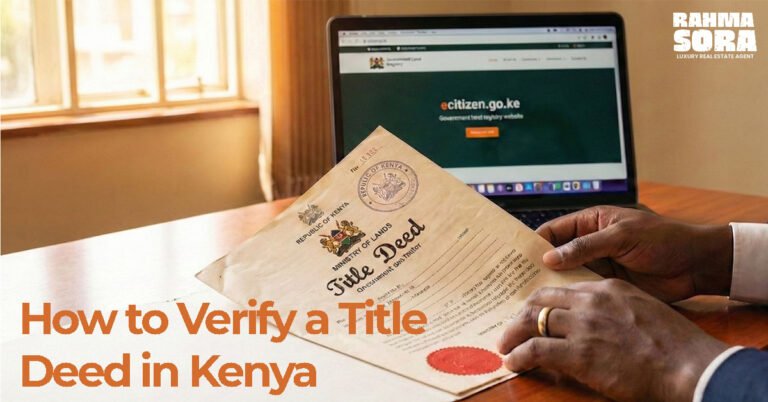
3. Verify the Title Deed
The title deed is one of the most important documents in any land transaction. It is the legal proof of ownership, and it should be checked carefully.
Make sure the title deed:
- matches the seller’s details
- has the correct parcel number
- is genuine and valid
- has no signs of tampering
- corresponds with the land on the ground
If anything looks unusual, ask questions and verify further. Fake or duplicate title deeds are common in some property scams, so take this seriously.
If possible, have a lawyer or professional property expert review the document for you.
4. Visit the Actual Site
Never buy land you have not seen. Site visits are essential because they allow you to confirm the location, boundaries, access roads, and surrounding developments.
During the visit, check:
- whether the plot exists physically
- whether the beacons are visible
- whether the location matches the documents
- whether there is access to the road
- whether the land is occupied or vacant
- what developments are nearby
Some buyers discover too late that the plot they paid for is smaller than expected, in a flood zone, under a road reserve, or in a disputed area. A site visit helps prevent this.
If you cannot visit personally, send a trusted surveyor, lawyer, or property professional.
5. Confirm the Exact Boundaries and Beacons
Knowing the exact size and boundaries of the plot is very important. Land can sometimes be sold using rough descriptions, but the actual measurements must match the records.
Ask for:
- survey maps
- beacon certificates if available
- subdivision details
- surveyor confirmation
If possible, hire a surveyor to confirm that the plot is the correct size and location. This is especially important if you are buying a piece of land in a subdivided area where boundaries may not be clearly marked.
Boundary disputes are common in Kenya, and they can become expensive and stressful. Verifying the boundaries early can save you a lot of trouble later.
6. Check for Encumbrances or Charges
A plot may look clean on the surface but still have legal restrictions attached to it. This is why checking for encumbrances is important.
Some land may be:
- used as loan security
- under dispute
- subject to inheritance issues
- involved in court proceedings
- restricted by government planning
If land is charged to a bank or tied to another legal obligation, the seller may not be free to transfer it to you immediately.
This is another reason why a land search and legal review are so important. You want to be sure the plot is free from claims before you commit money.
7. Understand the Land Use and Zoning
Not every plot can be used for every purpose. Before buying, confirm how the land is zoned and what it is legally allowed to be used for.
Ask whether the land is:
- residential
- commercial
- agricultural
- mixed-use
- industrial
This matters because your plans for the property may depend on local planning rules. For example, if you want to build rental apartments but the area is zoned only for low-density housing, you may face restrictions.
If you are buying land for future development, make sure the zoning supports your long-term plans. This is especially important in fast-growing towns and peri-urban areas.
8. Check Access Roads and Infrastructure
A cheap plot is not always a good deal if it is hard to access or lacks key services. Before buying, check the quality of the road leading to the property and whether the area has access to:
- water
- electricity
- sewer systems or septic suitability
- public transport
- drainage
A plot without road access can become a major inconvenience. In some cases, buyers discover that the road shown during the sale is just a private path or seasonal route.
Also think about future development. If roads and utilities are likely to improve soon, the property may be a good investment. If not, the cost of developing the land may be much higher than expected.
9. Review the Sale Agreement Carefully
Once you decide to buy, never pay without a proper sale agreement. A written agreement protects both the buyer and the seller and outlines the terms of the transaction.
The sale agreement should include:
- full names of buyer and seller
- parcel number and location
- agreed purchase price
- deposit amount
- payment schedule
- completion date
- transfer terms
- any special conditions
Do not sign a vague agreement or one you do not understand. If possible, have a lawyer draft or review the document before you sign.
A good agreement helps prevent misunderstandings and gives you legal protection if there is a dispute later.
10. Ask About Land Rates and Outstanding Dues
Some land comes with unpaid obligations such as land rates, ground rent, or service charges. If these are not cleared before transfer, you could inherit the problem.
Ask the seller whether there are any outstanding dues and request proof of payment where necessary. This is especially important for plots in urban areas, gated communities, or developed estates.
You do not want to pay for land and later discover additional debts tied to it.
11. Be Careful With Family or Inherited Land
Family land and inherited land often create disputes if not handled properly. One sibling may try to sell without the knowledge of others, or the land may still be in a deceased person’s name.
If the land belongs to a family or estate, confirm:
- who has the right to sell it
- whether all relevant parties have agreed
- whether succession has been completed
- whether legal authority has been granted
This type of land can be risky if the ownership structure is unclear. Take extra caution and involve a lawyer if necessary.
12. Watch Out for Too-Good-to-Be-True Deals
If a plot is being sold at a very low price compared to similar land in the area, be careful. While there may be genuine reasons for a lower price, it can also be a warning sign.
A suspiciously cheap plot may have:
- ownership problems
- legal disputes
- poor access
- zoning restrictions
- fake documentation
- hidden defects
Always compare prices with other plots in the same area. If a deal looks unusually good, it is worth investigating more deeply before you pay.
13. Work With Trusted Professionals
Buying land is not something you should do alone if you are unsure. A lawyer, surveyor, or experienced real estate agent can help you spot red flags and avoid costly mistakes.
Professionals can help you:
- review documents
- confirm ownership
- check boundaries
- explain the sale process
- identify scam risks
The cost of professional help is usually much smaller than the loss you could suffer from a bad purchase.
14. Understand the Transfer Process
Before making payment, make sure you understand how the transfer will happen. Ask:
- who will prepare the documents
- what needs to be signed
- when the balance will be paid
- how long the transfer takes
- who will handle registration
A proper transfer process should be clear from the start. If the seller is vague about the process or keeps delaying paperwork, treat that as a warning sign.
Conclusion
Knowing what to check before buying land in Kenya can save you from fraud, stress, and financial loss. Always verify ownership, do a land search, inspect the site, check the boundaries, review the title deed, and use a proper sale agreement. Do not rush because the price looks attractive.